
Eliminate data silos, dropped webhooks, and manual sync errors. We engineer production-grade REST, GraphQL, and event-driven API pipelines with enterprise authentication, automated retries, idempotency, and sub-100ms real-time synchronization.
{
  "source": "shopify_plus",
  "event": "order.fulfilled",
  "order_id": "ord_94102",
  "subtotal_cents": 52000,
  "idempotency": "e9a4f_7c"
}{
"netsuite_tranid": "SO-99202",
"gl_status": "posted",
"warehouse": "WH-WEST-12A",
"inventory_sync": true,
"reconciled": true
}Off-the-shelf connectors and quick webhook endpoints work when you have 10 transactions a day. But when real traffic hits, third parties change schemas, or networks time out, fragile integrations fail silently and corrupt business databases.
Without an ingestion buffer, a temporary 502 gateway error or 3-second database lock causes third-party webhooks (Stripe, Shopify, Twilio) to discard payloads permanently, resulting in lost orders and unhappy customers.
Naïve synchronous API calls exhaust vendor rate limits during traffic spikes. Without token-bucket throttling and exponential backoff, failing requests trigger aggressive retries that prolong downtime.
When an upstream service changes a field name, renames a status enum, or returns ISO timestamps instead of UNIX seconds, unvalidated JSON parsers crash, halting your downstream business workflows.
OAuth 2.0 refresh tokens expire unexpectedly, clock drift invalidates JWT assertions, or hardcoded API keys get accidentally rotated, causing sync engines to fail silently overnight.
When a webhook sender does not receive an HTTP 200 within 5 seconds, it retries. Without strict cryptographic idempotency keys, duplicate orders are generated and customers are billed twice.
When a financial or inventory sync discrepancies occur, teams have no central log of raw request bodies or response headers. Engineers spend days blindly debugging without trace IDs.
We build high-throughput connections across modern cloud endpoints, legacy SOAP/XML systems, financial gateways, and bespoke on-premise relational databases.
Custom delta listeners capturing record modifications in sub-second latency with automatic duplicate contact merging.
Atomic sales order, invoice, and journal entry syncing with strict financial GAAP audit trails and tax rate lookups.
Resilient webhook listener infrastructure handling automated churn recovery, payment failures, and payout splits.
Zero overselling guarantees with distributed Redis lock management during high-velocity flash sales and drop events.
Continuous streaming ELT pipelines feeding transactional changes into analytical stores without query locking.
Bridge 20-year-old on-prem mainframes and batch CSV files into modern, event-driven REST and GraphQL microservices.
We do not write fragile direct point-to-point scripts. We build modern, decoupled integration architectures that absorb volume surges and guarantee at-least-once delivery.
Every incoming webhook is immediately acknowledged with an HTTP 200 within 25ms and persisted to a durable Redis BullMQ or AWS SQS stream. Processing is decoupled from ingestion, shielding your systems from third-party slowdowns.
Every request generates a deterministic SHA-256 idempotency signature cached in an atomic Redis distributed lock. Duplicate webhooks sent by retrying providers are safely identified and deduplicated before executing transactions.
Our edge proxy layer handles IP whitelisting, cryptographic HMAC verification, CORS management, and token-bucket rate limiting before packets ever reach your core application database.
Rather than wasteful bulk dumps that consume daily API quotas, our synchronization engines use timestamp watermarks and Change Data Capture (CDC) to transmit only altered fields and mutated states.
API endpoints are the #1 attack vector in modern enterprise architectures. We enforce banking-grade security protocols, automated key lifecycles, and isolated secrets vaults.
Background refresh daemons automatically renew access tokens 5 minutes prior to expiry, handling refresh token rotation without user interruption or sudden sync downtime.
Every incoming webhook payload is verified against shared cryptographic secrets using HMAC-SHA256 timing-safe comparisons, discarding spoofed requests immediately.
Zero plaintext credentials in application repositories or database tables. All API secrets are dynamically leased via encrypted cloud vaults with audit logging on every read.
Tokens are scoped to the exact micro-permissions required (e.g. read:orders only, no write:billing access). Outbound calls originate from static, dedicated enterprise proxy IPs.
Bridging the chasm between disparate data formats. We transform nested, inconsistent third-party payloads into clean, strongly typed canonical entities.
{
  "id": 849204819,
  "created_at": "2026-09-29T18:40:04-04:00",
  "total_price": "349.00",
  "customer": {
    "first_name": "Sarah",
    "last_name": "Jenkins",
    "email": "sarah@apexventures.co"
  },
  "line_items": [
    { "sku": "NX-88", "qty": 2 }
  ]
}{
"external_id": "SHOP-849204819",
"posting_date_utc": 1790707204,
"amount_in_cents": 34900,
"currency_iso": "USD",
"client_record_id": "CUST-9921",
"inventory_allocation": [
{ "internal_sku_id": "SKU_00192", "units": 2 }
],
"verified_at": "2026-09-29T22:40:04Z"
}Built with TypeScript and Zod. Any payload missing critical keys or with malformed types is trapped in quarantine before it touches your database.
Floating-point rounding errors can destroy ledger balance. We convert all currencies to integer cents/bips with fractional rounding safeguards.
Automatically flatten complex parent-child structures (e.g. order → line items → tax lines → discount codes) into relational tables with foreign key integrity.
Clean conversion of localized dates, daylight saving offsets, and custom formats into standardized ISO-8601 UTC timestamps across all systems.
External vendor APIs will go down. When they do, our resilient integration pipelines isolate the failure, queue the backlogged traffic, and resume delivery automatically.
Retries are spaced dynamically (1s, 2s, 4s, 8s, 16s...) with randomized jitter, preventing the destructive "thundering herd" effect from compounding the target system's recovery.
If a downstream service fails more than 5% of requests within a 60-second window, the circuit breaker trips instantly, preventing cascading timeouts and queue saturation.
Malformed or rejected payloads are captured in an encrypted DLQ with original headers and error stack traces. No message is ever discarded without manual administrator review.
Once a third-party vendor resolves an outage or schema patch, operators can replay 10,000+ quarantined messages safely in ordered batches with full audit validation.
Instant visibility into every API call across your fleet. Track latency percentiles, error rate anomalies, and quota thresholds before customers notice an issue.
Every incoming event is assigned a unique traceparent ID that correlates logs across API gateways, message queues, transformation workers, and external third-party calls.
Smart alerts sent directly to your Slack, PagerDuty, or Microsoft Teams channels when rate limits exceed 75% or downstream latency spikes above baseline.
Encrypted historical archive of raw request payloads and responses, enabling compliance adherence (SOC 2, GDPR, HIPAA) with full search and filtering capabilities.
Automated end-to-end synthetic probe transactions run every 60 seconds against critical integration endpoints to detect silent regressions before end users do.
See how high-growth scale-ups and global enterprises rely on our custom API pipelines to automate mission-critical commerce and financial data workflows.
A global consumer brand was suffering from overselling and inventory sync delays during Black Friday. We engineered an event-driven queueing pipeline syncing inventory across 8 fulfillment centers in under 2.5 seconds with exact-once GAAP order creation in NetSuite.
A high-growth B2B SaaS required automated revenue recognition, multi-currency ledger entries, and zero-touch prorated subscription upgrades. We deployed an idempotent webhook gateway processing 100% of Stripe billing events into general ledger journals.
Sales and marketing teams were working from desynchronized customer records. We architected a bi-directional delta synchronization pipeline with conflict-resolution logic, field-level ownership locks, and automatic lead enrichment.
A financial institution needed to power a high-performance modern customer mobile application on top of a 25-year-old on-premise mainframe. We engineered a Go-based proxy gateway converting modern JSON calls into XML transactions with edge caching.
We build high-performance digital products and platforms that drive real commercial results.
Dedicated 4WD e-commerce platform for Foton Tunland utes built from scratch on WordPress with model-specific fitment verification, dynamic suspension catalogs, and sub-second speed.
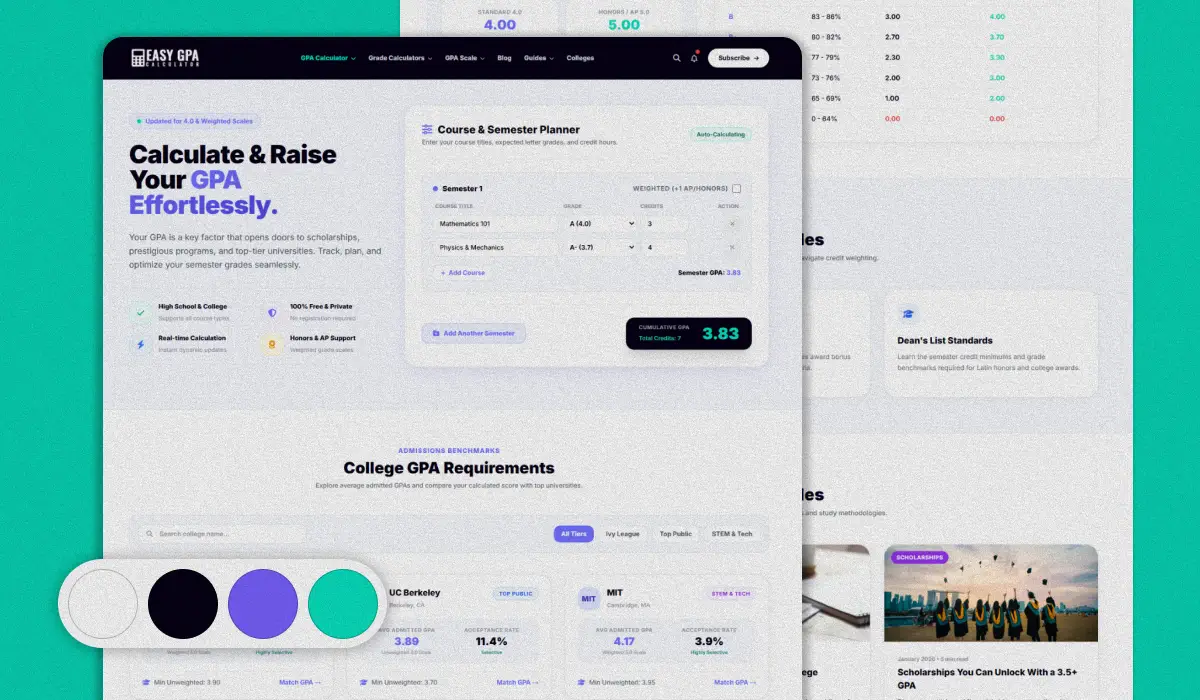
Startup calculation tool and college guide platform for students, re-engineered on WordPress with an in-memory computation engine and full programmatic SEO architecture.
Bespoke custom WordPress platform engineered from scratch for Egypt’s premier architectural glazing fabricator, featuring next-gen WebP portfolio galleries and localized regional SEO.
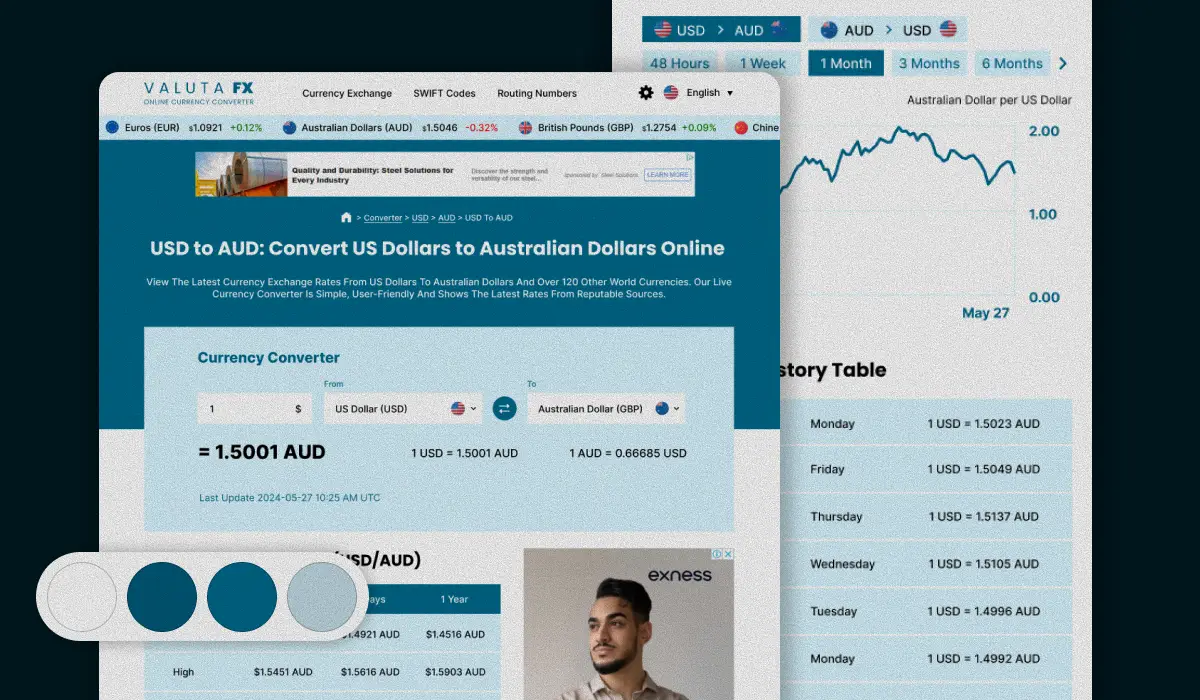
End-to-end UI/UX redesign and logo modernization for a high-traffic global currency converter, engineered with high-contrast fintech components and streamlined conversion flow.
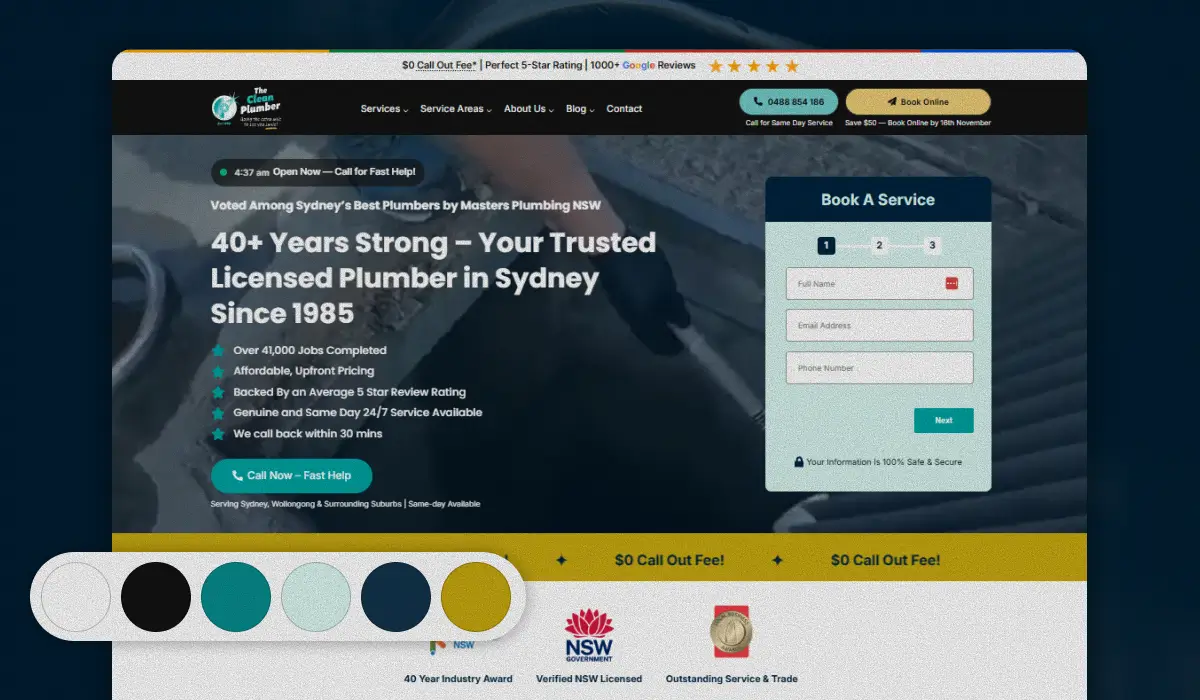
Full digital redesign for Sydney and Illawarra's premier plumbing specialists, engineered for sub-second mobile speed, friction-free booking forms, and high-converting local outreach.
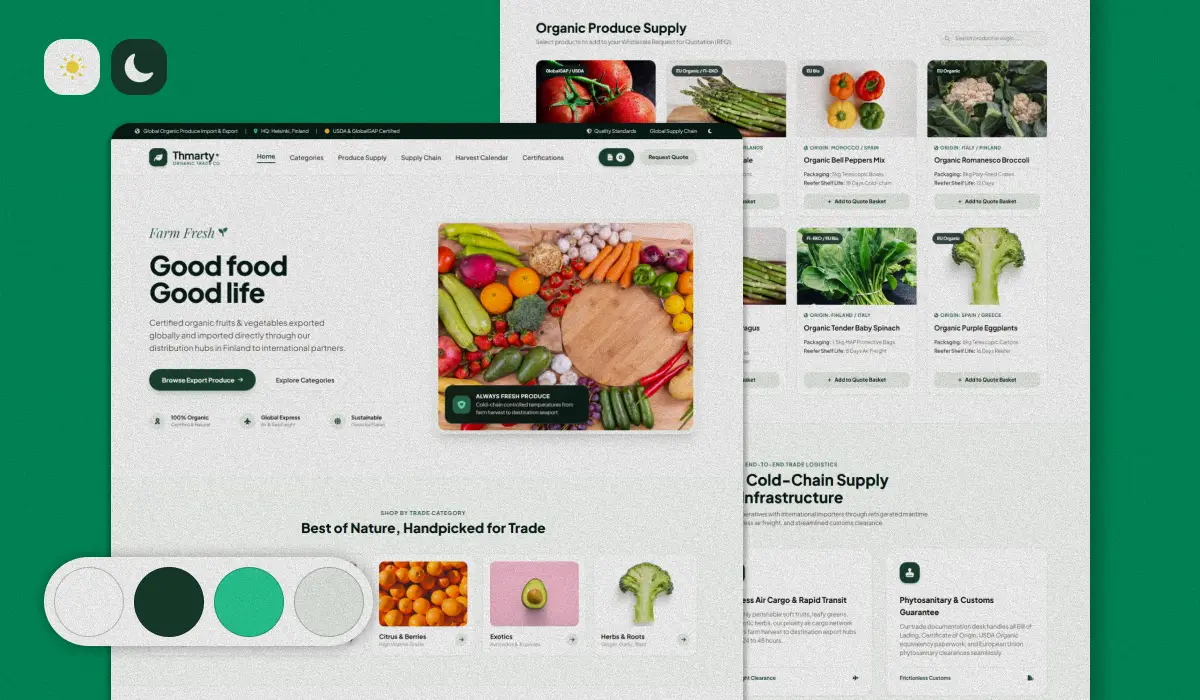
High-performance international trading portal for certified organic vegetables and fruits, featuring wholesale container specifications, EU compliance certifications, and automated B2B RFQs.
Modern corporate digital presence for an architectural elevator and mobility engineering leader, featuring interactive lift configurators, technical specifications, and luxury project showcases.
Trusted by clients who value quality and results.

"The Tunland 4x4 website has already made its first sale! We're so happy with the results. Thank you for all your help and support. Alaa did an amazing job bringing the vision and direction to life."


"Working with Code1001 made a huge difference for my clinic. The website is clean, loads fast, and patients find it very easy to book their sessions online. Alaa really listened to what we needed and delivered ahead of schedule."

"We're getting a lot of compliments on the new website, and we already received several quote requests through WhatsApp in the first week. Alaa was super helpful, patient, and delivered exactly what we asked for. Thank you so much!"

"Managing my student groups and teaching schedule used to take up hours of paperwork every week. Abdelrahman from the Code1001 team built a custom app that organized everything—classes, timings, and student tracking—in one simple place. It made my daily work so much easier. Thank you so much Abdelrahman and the Code1001 team!"

"Code1001 helped us take Step Up Academy to the next level. They created beautiful designs for our brand and automated our student registrations and daily follow-ups. What used to take hours of manual work every day now runs smoothly. Thank you so much for the wonderful work and continuous support!"
Everything you need to know about our production API integration architecture, protocols, security, and guarantees.
We implement token bucket and sliding window rate limiting algorithms in distributed Redis memory. Outbound calls are throttled per vendor endpoint based on their exact documented limits (e.g. Shopify GraphQL points, Salesforce daily calls, Stripe burst limits). If traffic approaches 80% of capacity, outbound requests are gently queued in Redis BullMQ rather than dispatched, eliminating HTTP 429 Too Many Requests errors and protecting your API credentials from being blacklisted.
Our architectures are completely decoupled. When a destination endpoint returns a 5xx error or times out, our ingestion gateway immediately stores the validated raw event in a durable queue. Automatic circuit breakers engage to pause subsequent outbound calls, and an exponential backoff schedule with jitter retries the payload safely. If an outage exceeds our retry thresholds, messages enter an encrypted Dead Letter Queue (DLQ) with original headers and timestamps, ready for 1-click batch replay once the vendor recovers. Zero data is ever lost.
Yes. We routinely build modern integration adapters for legacy enterprise systems including IBM AS400/iSeries, SOAP/XML web services, legacy Microsoft SQL Server databases, and scheduled batch SFTP CSV/EDI feeds. We build modern Go or Node.js proxy layers that translate complex legacy XML envelopes and flat files into clean, documented REST/JSON or GraphQL schemas that your modern applications can consume with sub-100ms latency.
All data in transit is encrypted using TLS 1.3 with mutual authentication (mTLS) where supported. Sensitive data at rest (such as payload archives in DLQs) is encrypted using AES-256 with customer-managed keys via AWS KMS or HashiCorp Vault. We enforce strict data minimization, scrubbing PII and PCI fields from application logs, and support GDPR/CCPA data residency requirements through regional cloud workers.
Point-to-point integrations connect System A directly to System B with hardcoded synchronous scripts. When System B goes down or changes its schema, System A fails immediately. An event-driven mesh introduces a decoupled queueing buffer and canonical data model between your systems. System A publishes an event once; the integration mesh validates it, normalizes it, and dispatches it to Systems B, C, and D asynchronously. It is significantly more resilient, scalable, and easier to maintain.
We isolate vendor-specific data structures behind strict type-safe schemas (using Zod or JSON Schema) before mapping them to your internal canonical model. If an unannounced field modification occurs, our runtime validation layer flags the anomaly and isolates the specific payload into quarantine while continuing to process healthy records. Furthermore, we pin specific API versions (e.g. Shopify 2026-04, Stripe 2025-08) and run automated regression tests against vendor staging environments.
Yes. We offer fully managed Enterprise Integration SLAs that include 24/7 proactive telemetry monitoring, synthetic canary pinging, automated OAuth token rotation verification, dead-letter queue resolution, and rapid emergency hotfixes whenever vendor APIs introduce breaking updates.
Standard two-way integrations between well-documented APIs (such as Shopify to NetSuite, or Stripe to HubSpot) typically ship in 2 to 3 weeks, including staging validation, load testing, and production cutover. Complex multi-system enterprise architectures involving legacy SOAP mainframes or custom high-volume streaming data pipelines typically take 4 to 6 weeks with comprehensive end-to-end milestone audits.
Book a 30-minute technical architecture scoping call. We will review your current data pipelines, eliminate dropped webhooks, and deliver a fault-tolerant integration blueprint within 48 hours.